Comparing the Effects of Different Drive Forms (Front, Rear, and All-Wheel Drive) on Tire Wear Rate and Replacement Cost of the Same Model
When planning long-term car ownership, enthusiasts and everyday drivers alike often consider engine performance, fuel economy, and reliability. Yet one of the most significant recurring costsâtiresâis frequently underestimated, even though tires are the only components in constant contact with the road and their wear directly affects both safety and expense. While many factors influence how quickly a tire wears (such as driving habits, alignment, road surfaces, and climate), the vehicleâs drivetrain configurationâfront, rear, or all-wheel driveâplays an outsized role in shaping tire wear patterns and the rhythm of replacement costs.
How Drivetrains Affect Tire Load and Wear
To understand why drivetrain type matters for tire wear, it helps to view tires not as isolated parts, but as elements of a system that must handle propulsion, steering, braking, and weight transfer forces simultaneously.
In a front-wheel drive (FWD) vehicle, the engine transmits power and torque to the front wheels, which are also responsible for steering. Consequently, front tires in FWD vehicles are tasked with propulsion, braking, and steeringâan often-overlooked trio of responsibilities that subjects them to significantly higher friction cycles than rear tires. Research in tire engineering demonstrates that wear rate increases proportionally with normal force, meaning that greater and more frequent friction accelerates tread degradation (Persson, Xu, & Miyashita, 2024; Jordiâs Tire Shop, 2025).
Rear-wheel drive (RWD) vehicles separate these roles: the rear tires produce propulsion while the front tires handle steering and much of the braking load. In this setup, front and rear tires each have a distinct functional profile, which often results in more balanced wear patterns than in FWD systems except under aggressive driving or frequent hard acceleration, when rear tires can wear notably faster due to their role in propulsion.
All-wheel drive (AWD) and four-wheel drive (4WD) vehicles distribute torque to all four wheels, which ideally should even out wear across all tires. However, the reality is more nuanced. Because AWD systems depend on precise tire circumference and tread depth uniformity for traction and drivetrain health, even small differences in wear between tires can create torque imbalance, increasing demand on differentials and transfer cases. Manufacturer technical bulletins specify that tire circumferences must be matched within tight tolerances, typically within 10 mm, to avoid drivetrain chatter or premature component wear (National Highway Traffic Safety Administration, 2023; AAA Automotive, 2025).
In all drivetrains, vehicle weight distribution, tire compound, and driver behavior further modulate wear, but drivetrain remains a fundamental structural influence on how force loads are distributed among tires.
Front-Wheel Drive: High Front Tire Stress and Wear
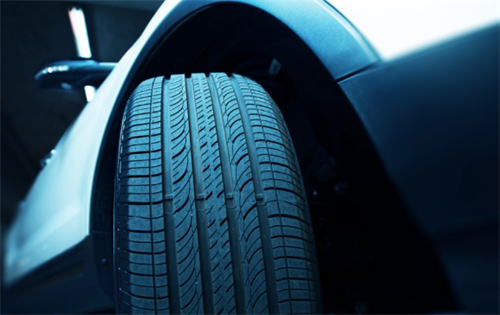
In front-wheel drive cars, the front tires must generate forward motion, guide directional changes, and absorb the bulk of braking forces. Put simply, front tires in FWD configurations wear faster, and often significantly faster, than rear tires. Studies and real-world consumer observations indicate that FWD systems produce front tire wear rates up to 30â40% faster than rear tires under typical urban and highway driving conditions (Jordiâs Tire Shop, 2025).
Real-world owner reports reinforce this pattern: drivers of FWD vehicles routinely notice the front tires wearing more heavily after relatively short intervals, such as 6,000 km, compared with minimal rear tire wear. When left unaddressed, this wear imbalance can degrade handling and grip, particularly in wet or slippery conditions, because worn front tires struggle more with steering and braking forces (Jordiâs Tire Shop, 2025).
The practical implication for owners is clear: regular tire rotation is essential for FWD vehicles. Most manufacturers recommend rotation intervals around 8,000 km (5,000 mi) or coordinated with oil changes to equalize wear. Rotating tires at appropriate intervals promotes even tread life across all four tires, reducing the frequency of front-only replacements and lowering total cost over multiple years (The Tire Review, n.d.).
Even without rotation, the magnitude of front tire wear is well documented in mainstream household tire data, confirming both theoretical and community observations (Jordiâs Tire Shop, 2025).
Rear-Wheel Drive: Balanced Wear With Rear Bias Under Load
Rear-wheel drive offers a contrasting tire wear profile. In RWD vehicles, the engineâs propulsive force is delivered to the rear wheels, which are thus subject to significant traction demands under acceleration. Meanwhile, front tires handle steering and most braking loads. This separation generally leads to more balanced wear patterns, but the rear tires still bear a substantial share of load in real-world driving.
Performance-oriented RWD cars, especially those with high torque, often demonstrate rear tire wear rates comparable to or exceeding front tire wear under spirited driving conditions, including repeated hard launches or high lateral accelerations. Driver community experience confirms this pattern, with some owners reporting accelerated rear tire wear in torque-biased vehicles (Reddit owner reports; Jordiâs Tire Shop, 2025).
Consistent tire rotation and alignment maintenance are important in RWD vehicles to prevent single-tire overuse. Monitoring tread depth and inflation helps maintain handling and balance, while in some performance cars, staggered tire compounds with harder rear tires may extend life (Jordiâs Tire Shop, 2025).
AWD and 4WD: Even Wear Needs Exact Matching
All-wheel and four-wheel drive technologies provide superior traction and stability, but with distinct maintenance requirements. Because AWD and 4WD systems distribute torque to all four wheels, each tire must have the same effective diameter to avoid stress on differentials and transfer cases. Even small differences in tire wear or tread depth can create artificial slippage conditions, leading to drivetrain overheating or accelerated component wear (Consumer Reports, 2025; AAA Automotive, 2025).
For this reason, manufacturers recommend replacing all four tires simultaneously on AWD/4WD vehicles if tread depths are not uniform. Tire shavingâa process where new tires are ground down to match the tread depth of existing tiresâis often used to maintain uniform rolling diameter, protecting drivetrain components while reducing replacement costs (Consumer Reports, 2025).
While AWD/4WD systems can produce relatively uniform wear, they require disciplined maintenance. Neglecting uniformity can shorten tire life and result in expensive differential or transfer case repairs (AAA Automotive, 2025).

Translating Wear Patterns into Ownership Costs
Tire wear patterns directly influence replacement costs over a vehicleâs life. FWD vehicles often require multiple front tire replacements before rear tires need attention, especially if rotation is inconsistent. Over a 100,000 km lifetime, this can mean two or more front tire replacements before major rear tire service.
RWD vehicles may have more balanced wear, but high-power models often require earlier rear tire changes. AWD/4WD vehicles, while mitigating isolated tire overload, can face higher short-term replacement costs if all four tires must be changed simultaneously to maintain drivetrain integrity. Sets of quality all-season tires can cost several hundred dollars, making this a major maintenance expense (The Tire Review, n.d.).
Owners can mitigate costs through regular rotation, tread monitoring using simple tools, and selecting tires with stronger wear ratings. Premium tires with higher upfront cost may offer better long-term value by reducing replacement frequency (Consumer Reports, 2025; Jordiâs Tire Shop, 2025).
Maintaining Tires Across Drivetrains: Best Practices
Regardless of drivetrain, tire rotation and consistency are critical for long-term performance and cost control. Experts recommend rotating tires every 5,000â8,000 mi (8,000â13,000 km), aligning with many vehicle service intervals. Proper alignment and inflation prevent uneven wear and localized stress (The Tire Review, n.d.).
AWD/4WD owners must ensure tire size and tread depth match manufacturer tolerances to protect differentials and transfer cases. If a single tire is damaged, tire shaving or installing a tread-matched replacement can preserve drivetrain health while avoiding the cost of four new tires (Consumer Reports, 2025; AAA Automotive, 2025).
Your choice of drivetrain influences traction, performance, and long-term maintenance costs. FWD cars concentrate stress on front tires, RWD layouts distribute loads more evenly, and AWD/4WD systems require strict tire uniformity to avoid expensive drivetrain issues. With disciplined maintenance, rotation, and monitoring, differences in replacement costs across drivetrains can be minimized.
References:
[1] AAA Automotive. (2025). 4WD and AWD tire concerns. AAA. https://www.aaa.com/autorepair/articles/4WD-and-AWD-Tire-Concerns
[2] Consumer Reports. (2025). Tire shaving and AWD compatibility. ConsumerReports.org. https://www.consumerreports.org/tire-buying-maintenance/tire-shaving-all-wheel-drive-car-no-replacing-all-four-tires/
[3] Jordiâs Tire Shop. (2025). Do front or back tires wear faster? Tire wear patterns explained. https://jordistireshop.com/do-front-or-back-tires-wear-faster/
[4] National Highway Traffic Safety Administration. (2023). Technical service bulletin: AWD system concern due to tire circumference. NHTSA.
[5] The Tire Review. (n.d.). AWD tire rotation guidelines for maximizing tire life. https://thetirereviews.com/awd-tire-rotation/
Recommended for you