The Price of High Performance: In-Depth Analysis of BMW M3 and Porsche 911 Ownership Costs
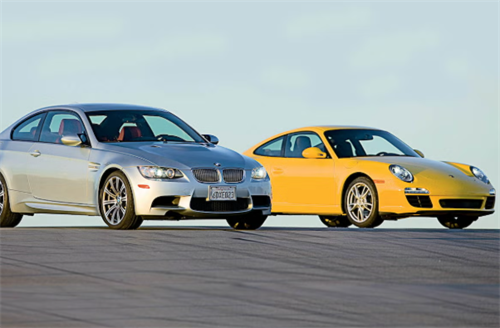
For many car enthusiasts, owning a high-performance car like a BMW M3 or Porsche 911 represents the ultimate driving pleasure. However, the financial reality goes far beyond the initial purchase price. Compared to mainstream sedans, these vehicles incur significantly higher ongoing costs in insurance, tires, fuel, and maintenance.
Insurance Costs: The Premium Paid for Performance
Insurance is often the first recurring expense shock new car owners face. Insurance companies assess high-performance models based on their higher maintenance costs, acceleration capabilities, and statistically higher risk. For the BMW M3 Competition, this results in an average annual premium between $2,500 and $3,000, with a total five-year cost of approximately $12,848 (MoneyGeek, 2025). The five-year insurance cost for the Porsche 911 Carrera S is roughly equivalent, at around $12,511 (Edmunds, 2025), attributed to its expensive aluminum-intensive structure and complex rear-engine layout, which makes maintenance costs exceptionally high. This contrasts sharply with the standard BMW 330i sedan, whose five-year insurance cost is only around $6,001 (Edmunds, 2025). This significant difference highlights how performance engineering directly and significantly impacts annual insurance budgets.
Tire Wear and Replacement: The High Cost of Grip
The superior handling of performance cars is achieved through soft composite, high-grip tires that sacrifice durability for ultimate grip. The BMW M3 Competition typically comes equipped with 275/35 ZR19 tires at the front and 285/30 ZR20 at the rear. A set of high-performance tires like the Michelin Pilot Sport 4S can cost between $1,200 and $1,500 and may only last 10,000 to 15,000 miles under aggressive driving (Autocar, 2021). The Porsche 911 Carrera S, equipped with wider 20-inch front and 21-inch rear wheels, faces higher costs, with a set of tires often exceeding $2,000. Its rear-engine layout and powerful acceleration cause wear to accelerate at a similar rate (Autocar, 2021). This creates a decisive financial divide with mainstream sedans like the BMW 330i, which use more durable all-season tires that cost only a fraction of that.
Fuel Consumption: The Gap Between Official Ratings and Reality Real-world fuel consumption for performance cars is highly sensitive to driving style, resulting in a significant gap between official ratings and actual costs. The BMW M3 Competition, with an official combined fuel economy of approximately 23 mpg, can drop to 16-18 mpg or lower under aggressive driving (Edmunds, 2025). Similarly, the Porsche 911 Carrera S, rated at approximately 24 mpg, can easily drop below 20 mpg under aggressive driving (Edmunds, 2025). This difference highlights that driving behavior is a major determinant of cost. Assuming 12,000 miles driven annually using premium fuel, a spiritedly driven M3 could cost $600-$800 more in fuel per year than a 330i, transforming fuel from a fixed expense into a variable cost directly related to driving pleasure.
Maintenance & Repair: A Key and Often-Overlooked Cost
A key and often-underestimated category is regular maintenance. Performance cars require specialized service, fluids, and parts. Maintenance costs for the BMW M3 are higher than for the standard 3 Series. Industry data shows that a minor service (oil change, inspection) can cost $400-$600, while a major service, involving brake fluid, differential oil, and spark plug replacements, can reach $1,500-$2,000. Porsche maintenance is known for its precision and corresponding pricing, with minor services averaging $800-$1,200 and major services often exceeding $2,000. Both manufacturers offer prepaid maintenance plans to aid budget planning. In contrast, the BMW 330i's maintenance costs are significantly lower, representing a substantial difference in the total cost of ownership equation.
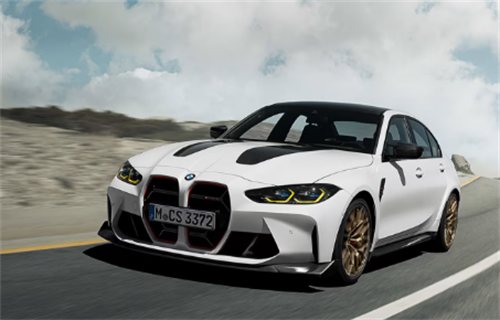
Core Car Maintenance Costs Comparison
In terms of long-term ownership costs, the BMW M3 Competition, Porsche 911 Carrera S, and BMW 330i differ significantly, especially in the three core areas of insurance, tires, and fuel. Based on average driving intensity, the annual insurance cost for the BMW M3 Competition is approximately $2,500 to $3,000, more than double the approximately $1,200 for the regular BMW 330i. The Porsche 911 Carrera S has slightly lower insurance costs than the M3, typically between $2,400 and $2,800, but still significantly higher than the regular 3 Series model.
Regarding tires, both the M3 and 911 use high-performance tires, which wear out quickly and therefore need to be replaced every 1 to 1.5 years. M3 tires cost approximately $1,200 to $1,500, while 911 tires are more expensive, typically exceeding $2,000 per set. In contrast, the tires on the standard BMW 330i are more durable, requiring replacement every 3 to 4 years at a cost of only $600 to $800. As for fuel costs, assuming 12,000 miles driven per year, the M3's annual fuel cost under normal driving conditions is approximately $2,800, but this will increase with frequent aggressive driving. The 911's fuel cost is slightly lower at $2,600, but it also increases depending on driving style. The BMW 330i's fuel cost is relatively economical, at approximately $2,000 per year.
Five-Year Overall Cost Perspective
To understand the complete financial situation, it is essential to integrate these costs into a comparative view. Over five years, assuming 12,000 miles driven annually, the combined expenses for insurance, tires, fuel, and maintenance for a BMW M3 Competition are estimated to total between $36,350 and $38,350. The Porsche 911 Carrera S, with its higher tire and maintenance costs, could see total expenses between $38,700 and $40,700. This contrasts sharply with the benchmark BMW 330i, which incurs approximately $19,900 to $20,900 over the same period (estimates compiled from Edmunds, 2025; MoneyGeek, 2025, and industry maintenance data). These figures illustrate that the total cost of ownership for these performance cars is roughly twice that of mainstream performance sedans.
Depreciation: The Largest Hidden Cost
Depreciation is typically the largest expense in any total cost analysis. While popular models like the 911 have historically depreciated more slowly, the losses are still substantial. A standard 330i could lose 50-60% of its value over five years. An M3 might depreciate by 45-55%, while a 911 might depreciate by 40-50%. This means that a $110,000 911 could still lose more than $45,000 in value within five yearsâa cost far exceeding annual operating expenses. Therefore, the high depreciation rate also explains why there are relatively more similar high-performance certified used cars with a 2-3 year age on the market. Their prices already include most of the depreciation costs borne by the first owner.
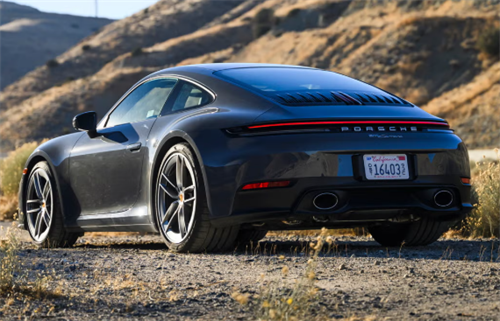
Comprehensive Analysis: The Financial Picture of High-Performance Ownership
When all cost vectors are integrated, the complete picture of long-term ownership of a high-performance car becomes clear. Based on a comprehensive analysis of data from sources such as Edmunds (2025) and MoneyGeek (2025), and incorporating maintenance and depreciation estimates, a five-year cost analysis is as follows:
BMW M3 Competition: Starting price approximately $80,000, operating costs (insurance, fuel, tires, maintenance) are likely to be $36,000-$40,000, plus $40,000-$45,000 in depreciation, resulting in a total cost of ownership of close to $80,000 over five years.
Porsche 911 Carrera S: Starting price approximately $110,000, operating costs are likely to be $39,000-$42,000, depreciation $50,000-$55,000, total expenses close to $100,000.
BMW 330i: Five-year total cost (combining lower operating expenses and a higher depreciation rate) is likely to be close to $45,000-$50,000.
Therefore, the performance premium is not a small difference, but nearly double the total financial commitment.
A Rational Passion Owning a BMW M3 or Porsche 911 is a deeply rewarding experience that blends engineering excellence with emotional excitement. However, this experience comes with a clear and quantifiable financial commitment. As the analysis shows, when all major expense categories are included, the total cost of ownership is approximately twice that of a mainstream performance sedan. By understanding these costsâespecially the often-overlooked maintenance expensesâand budgeting accordingly, enthusiasts can fully embrace their performance car dream without unexpected financial troubles. The key is to enter this realm with a clear understanding, a prepared budget, and the realization that the thrill of performance goes hand in hand with a significant and quantifiable ongoing investment.
Referencesï¼
[1] Edmunds. (2025). 2025 BMW M3 Cost to Own. Retrieved from https://www.edmunds.com/bmw/m3/2025/cost-to-own/
[2] Edmunds. (2025). 2025 Porsche 911 True Cost to Own. Retrieved from https://www.edmunds.com/porsche/911/2025/cost-to-own/
[3] MoneyGeek. (2025). BMW M3 Insurance Cost Estimates. Retrieved from https://www.moneygeek.com/insurance/auto/bmw-m3-insurance/
[4] Autocar. (2021, April 30). BMW M3 vs Porsche 911 Carrera S Twin Test. Retrieved from https://www.autocar.co.uk/car-review/bmw/m3-vs-porsche-911
[5] Industry maintenance cost data and owner surveys for BMW and Porsche models.
Recommended for you