Hyundai IONIQ 5: How 800V Ultra-Fast Charging Is Redefining EV Ownership by Saving Your Time
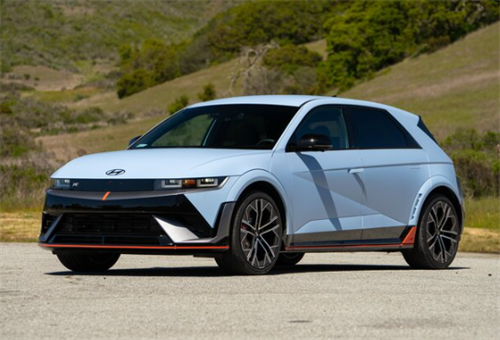
The Hyundai IONIQ 5 marks a fundamental shift in electric vehicle ownership by reframing charging from a logistical constraint into a fast, flexible, and incidental part of everyday mobility. Built on an 800-volt electrical architecture, the vehicle challenges the long-held assumption that effective EV use depends primarily on overnight home charging, instead enabling rapid energy replenishment that aligns with real-world travel patterns.
This capability reshapes how drivers plan trips, assess costs, perceive battery longevity, and interact with their vehicles on a daily basis, reducing the need for rigid scheduling and extensive planning. By prioritizing time efficiency, usability, and practical flexibility, the IONIQ 5 positions the electric vehicle not as a system that demands behavioral compromise, but as an always-ready mobility solutionâsignaling a broader evolution in how electric mobility is designed, experienced, and evaluated.
Ultra-Fast Charging: From Planning to Practicality
At the core of this transformation is the IONIQ 5âs 800V electrical architecture, which allows DC fast charging from 10% to 80% in approximately 18 minutes. In practice, five minutes of charging can provide around 100 km of range, sufficient for daily commutes or spontaneous trips without the typical anxiety associated with EV travel (Hyundai Motor Company, 2024).
Unlike conventional 400V EVs, which require careful routing and longer charging stops, the IONIQ 5 integrates charging seamlessly into everyday routines, such as coffee breaks, grocery runs, or lunch stops. Its compatibility with both new and legacy chargers further reduces the need for meticulous planning, allowing the vehicle to function as a ready-to-use tool rather than a constraint.
The Vehicle-to-Load (V2L) feature enhances this flexibility by enabling the car to power devices, appliances, and workstations directly from its battery. This capability transforms the EV into a mobile utility hub, useful for camping, remote work, or emergency situations. Owners frequently report using V2L for remote work, outdoor entertainment, and as a backup power source, highlighting how ultra-fast charging combined with smart features extends the vehicleâs utility far beyond transportation alone (Hyundai Motor Company, 2024).
Long-Term Battery Health: Myth vs Reality
A common concern is whether frequent ultra-fast charging accelerates battery degradation. Data from Hyundai and independent studies indicate that modern 77â84 kWh lithium-ion cells in the IONIQ 5 degrade only modestly under regular fast charging. Hyundai reports that an IONIQ 5 battery subjected to frequent ultra-fast charging retains over 90% of its original capacity after 160,000 km (Hyundai Motor Company, 2024). Standard home charging typically results in 1â2% capacity loss per year, while consistent ultra-fast charging may increase degradation slightly to 2â3% annually.
This difference is manageable, and when weighed against the convenience and flexibility of ultra-fast charging, the trade-off is minimal. Advanced thermal management and software-controlled charging rates further mitigate long-term wear, ensuring that ultra-fast charging does not significantly compromise battery longevity (U.S. Department of Energy, 2025).
Financial Implications: Public Fast Charging vs Home Charging
Relying primarily on ultra-fast public chargers raises questions about cost. While per-kWh rates at public chargers are higher than at home, the total cost of ownership (TCO) often remains comparable when installation costs, maintenance, and lifestyle factors are considered. Installing a home Level 2 charger can cost $1,000â$2,000 or more and may require electrical upgrades, whereas ultra-fast public charging eliminates most infrastructure costs (CardinaleWay Hyundai of El Monte, 2025).
Even with slightly higher per-kWh rates, the total cost over five years can be neutral or favorable, particularly when accounting for the value of time saved and flexibility. For urban residents or apartment dwellers, skipping home charger installation while maintaining convenience becomes a practical, cost-effective solution (U.S. Department of Energy, 2025).
Redefining Driving Habits and Range Perception
Perhaps the most profound effect of ultra-fast charging is psychological. Traditionally, EV drivers monitored battery levels closely and planned trips meticulously. IONIQ 5 owners report a marked reduction in ârange anxietyâ and greater freedom in daily driving decisions. With fast charging available at short intervals, range is no longer a limiting factor, enabling spontaneous travel and reducing the mental burden of long-distance trips (Hyundai Motor Company, 2024).
This shift also changes perceptions of battery capacity. Drivers who previously insisted on larger packs for peace of mind may find smaller batteries sufficient when they can reliably add 100 km of range in five minutes. This transformation affects purchasing priorities and long-term planning, as range becomes a flexible parameter rather than the defining constraint of EV usability.
Design, Comfort, and Daily Usability
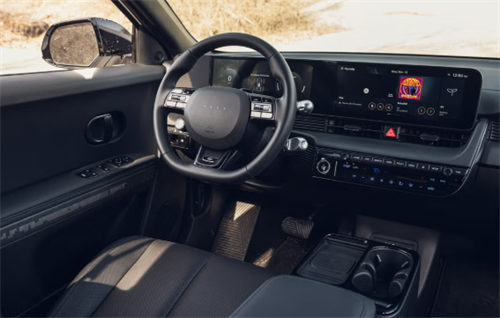
The IONIQ 5âs Living Space interior complements this ownership paradigm. A flat floor and long wheelbase create spacious second-row legroom, while the sliding Universal Island console enhances comfort and storage flexibility. Dual 12.3-inch displays, wireless CarPlay/Android Auto, and an optional Vision Roof reinforce the sense of space and practicality. Beyond aesthetics, these features support everyday use, seamlessly integrating the vehicle into routines, whether charging at a café or powering devices via V2L (Flexsim, 2025).
Performance and Safety: Seamless, Stress-Free Driving
Multiple powertrains, from rear-wheel-drive long-range models to dual-motor 320 hp AWD versions, provide a balance of efficiency, acceleration, and confidence. The IONIQ 5âs low center of gravity, flat battery layout, and adaptive suspension ensure composed handling in both urban and highway settings. Hyundai SmartSense® safety technologies, including lane-following, collision avoidance, and blind-spot monitoring, enhance driver confidence and reduce stress, making the vehicle reliable and easy to live with on a daily basis (Insurance Institute for Highway Safety, 2025).
Time as a Cost: How Ultra-Fast Charging Redefines the Economics of Waiting
Discussions about charging costs typically focus on electricity prices and infrastructure investment, but ultra-fast charging introduces a more fundamental variable into long-term EV ownership: time. Traditional home charging and slower public charging models implicitly assume that an ownerâs time has little economic value, requiring vehicles to be plugged in overnight or left stationary for extended periods. The IONIQ 5âs 800V ultra-fast charging disrupts this assumption by compressing charging time to a scale that aligns with everyday activities, effectively transforming charging from a scheduled task into an incidental action.
When a vehicle can recover meaningful range in five to ten minutes, the opportunity cost of charging changes dramatically. Instead of planning around charging sessions, drivers incorporate them naturally into routinesâduring short breaks, errands, or rest stops that would occur regardless of vehicle energy needs. Over years of ownership, this accumulated time savings becomes substantial, even if it is rarely quantified in traditional total cost of ownership models. In this context, ultra-fast charging does not merely reduce inconvenience; it alters the economic equation by minimizing wasted or unproductive time.
This shift also reframes the comparison between home charging and public fast charging. While home charging may offer lower per-kWh electricity costs, it often requires behavioral compromisesâcharging only at specific times, ensuring overnight availability, or delaying spontaneous travel. Ultra-fast charging restores temporal flexibility, allowing owners to prioritize mobility over scheduling constraints. For many users, particularly those with unpredictable routines or frequent long-distance travel, the value of regained time outweighs modest differences in energy pricing.
Over the long term, this redefinition of time cost contributes to a broader change in how EVs are perceived. Vehicles like the IONIQ 5 no longer demand adaptation from their owners; instead, they adapt to human schedules. By minimizing waiting as a structural part of ownership, ultra-fast charging helps reposition the EV from a system that requires lifestyle adjustments into one that seamlessly supports modern mobility demands.
The Big Picture: Ultra-Fast Charging as a Game-Changer
The IONIQ 5 demonstrates that ultra-fast charging is more than a convenienceâit fundamentally reshapes EV ownership. It reduces dependence on home infrastructure, lowers upfront investment barriers, minimizes range anxiety, maintains battery health, and balances total cost of ownership. By turning the EV into a multi-functional lifestyle tool rather than a vehicle that dictates schedules, the IONIQ 5 moves electric mobility beyond the planning-intensive stereotype and establishes a new standard for flexibility, usability, and everyday practicality (Hyundai Motor Company, 2024; U.S. Department of Energy, 2025).
References:
[1] CardinaleWay Hyundai of El Monte. (2025). 2026 Hyundai IONIQ 5 buyer guide. CardinaleWay Hyundai. https://www.cardinale-way.com/vehicles/new/2026-hyundai-ioniq-5
[2] Flexsim, G. (2025, January 15). Hyundai IONIQ 5 Lounge: Your ultimate guide to EV luxury. Automotive Reviews. https://www.automotivereviews.com/hyundai-ioniq-5-lounge-review
[3] Hyundai Motor Company. (2024, March 27). The new IONIQ 5: Even more perfect EV life with enhanced product value. Hyundai Newsroom. https://www.hyundai.com/worldwide/en/news
[4] Insurance Institute for Highway Safety. (2025). 2025 side collision and overall safety ratings for electric vehicles. IIHS. https://www.iihs.org/ratings
[5] U.S. Department of Energy. (2025). Electric vehicle benefits and incentives. U.S. Department of Energy. https://www.energy.gov/eere/electricvehicles/electric-vehicle-benefits-and-incentives
Recommended for you