The Global Adaptability of the Honda Civic Type R: Brake Wear, Performance Limits, and Driver Reality on Germanyâs Autobahn and Japanâs Mountain Roads
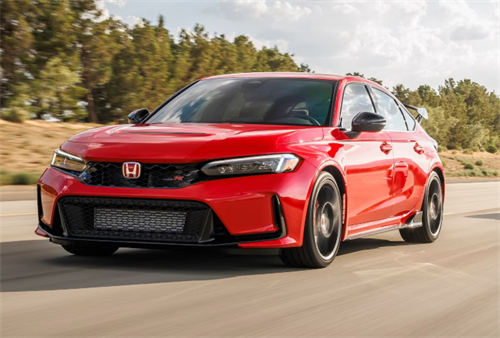
Few modern performance cars are asked to live such radically different lives as the Honda Civic Type R. In Germany, it is unleashed on sections of unrestricted Autobahn, repeatedly tested at sustained triple-digit speeds where thermal stability matters more than outright grip. In Japan, its homeland, the same car is more often pushed through narrow, technical mountain passes, where elevation changes, repeated braking, and steering precision dominate the experience.
This contrast raises a practical question rarely explored in marketing materials or standard road tests: how does the Civic Type R actually adaptâmechanically and economicallyâto these extremes over time? More specifically, how do brake wear patterns, thermal loads, and component durability differ between these two environments, and what does that mean for owners who genuinely use the car as intended?
Why the FL5 Type R Is Built the Way It Is?
Hondaâs approach to the FL5 Civic Type R is unusually conservative in an era dominated by all-wheel-drive hot hatches and dual-clutch transmissions. Rather than chasing headline acceleration figures, Honda doubled down on front-wheel-drive purity, manual engagement, and mechanical consistency.
At the heart of this philosophy is the revised 2.0-liter turbocharged VTEC engine, producing 329 PS and 420 Nm, making it the most powerful front-wheel-drive production car of its generation. However, raw output alone does not explain the carâs global adaptability. Honda reinforced the body structure, widened the track, lowered the center of gravity, andâcritically for long-term useâredesigned brake cooling ducts and airflow management around the front axle.
These decisions matter profoundly when comparing Autobahn use to Japanese touge driving. Sustained high-speed runs generate continuous thermal stress, while mountain roads generate repeated peak braking loads. Hondaâs engineers did not optimize for one scenario at the expense of the other; instead, they focused on thermal stability over time, even if that meant higher upfront costs and limited production volumes.
Autobahn Reality: Sustained Speed and the Physics of Heat
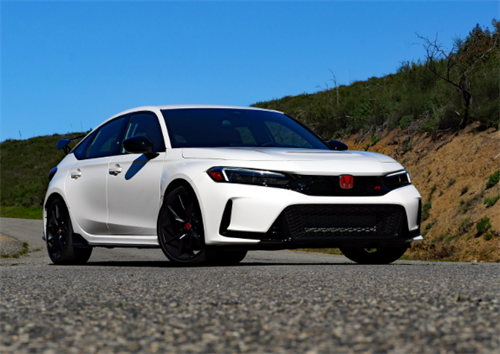
On Germanyâs unrestricted highways, the Civic Type R is not competing in short bursts. Instead, it is often held between 200â250 km/h for extended periods, something few hot hatches can tolerate without degradation. In this environment, brake wear is less about frequency and more about heat soak and cooling efficiency.
Data from German owner collectives and TÃV-linked inspection reports indicate that front brake pads on Autobahn-driven Type Rs tend to last longer in terms of mileage than those used primarily on mountain roads, often exceeding 45,000â50,000 km under mixed high-speed touring conditions. The reason is counterintuitive: braking events are fewer, more predictable, and often executed at higher airflow speeds, which dramatically improves cooling efficiency.
However, discs tell a different story. Prolonged high-speed deceleration from 230 km/h places immense stress on rotor metallurgy. While Hondaâs factory Brembo setup resists warping better than most competitors, micro-cracking and heat checking appear earlier in Autobahn-heavy usage profiles, typically after repeated high-speed emergency braking rather than daily commuting.
This pattern underscores a key insight: Autobahn driving favors pad longevity but accelerates rotor fatigue, a trade-off owners must understand before assuming âhighway miles are easy miles.â
Japanâs Mountain Roads: Where Brakes Age Fast
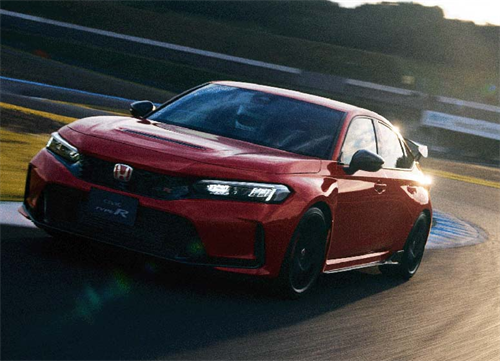
In contrast, Japanâs winding mountain roadsâoften narrow, steep, and relentlessly technicalâtell a very different story. Here, speeds are lower, but braking frequency is dramatically higher. A single spirited downhill run can involve dozens of near-threshold braking events, each compounding thermal load before the system can fully recover.
Japanese inspection data and enthusiast maintenance logs show that front brake pads on mountain-driven Civic Type Rs may require replacement as early as 25,000â30,000 km, even when driven responsibly. The issue is not brake size or stopping powerâboth remain exemplaryâbut heat accumulation without sufficient airflow.
Honda anticipated this reality. The FL5âs revised brake ducting was specifically validated at circuits like Suzuka and on mountain routes in Tochigi Prefecture, where repeated braking under low airflow conditions exposed weaknesses in earlier designs. While the improvements are real, physics remains physics: repeated energy conversion without cooling time accelerates wear.
Notably, rotor wear in Japan tends to be more uniform than in Germany, with fewer heat cracks but faster overall material loss. In practical terms, Japanese mountain driving consumes consumables faster but more evenly, whereas Autobahn use stresses components less frequently but more violently.
Chassis Balance and Steering: Why Environment Shapes Perception
Brake wear is only one piece of the adaptability puzzle. Driver perception of the Civic Type R differs dramatically between Germany and Japan, even when mechanical reality is unchanged.
On the Autobahn, the FL5âs exceptional high-speed stability becomes its defining trait. The stiffer body shell, refined aerodynamics, and precise steering contribute to a sense of calm at speeds where many rivals feel nervous. German testers consistently note that the car feels âunderstressedâ at velocities that would overwhelm older hot hatches.
In Japan, however, the narrative shifts. On tight mountain roads, the Civic Type R feels largeâits 4,594 mm length and wide track become tangible constraints. Yet this same width delivers immense front-end grip and steering accuracy, allowing skilled drivers to place the car with millimeter precision. Here, adaptability is not about comfort but predictability under load, something the FL5 delivers better than most front-wheel-drive cars ever made.
Manual Transmission and Driver Load Over Time
One often-overlooked factor in long-term adaptability is the human element. The Civic Type Râs manual gearbox is widely regarded as one of the finest ever fitted to a modern performance car, and this is not mere nostalgia.
On the Autobahn, the gearbox fades into the background, allowing drivers to cruise at high speed with minimal effort. In Japanâs mountains, however, constant shifting becomes part of the workload. Over time, this affects not just driver fatigue but mechanical wear patternsâclutch components in Japan-driven cars show marginally higher wear rates, especially among owners who regularly drive aggressively downhill.
Hondaâs rev-matching system mitigates this to an extent, reducing shock loads and extending drivetrain life. This is a subtle but crucial example of engineering choices made for global use, not just headline performance.
Reliability, Ownership Costs, and the Reality of Rarity
Across both markets, reliability data remains strong. The K20C1 engine architecture has proven robust when properly maintained, and no systemic failures have emerged in either Germany or Japan. However, maintenance discipline matters more for Type R owners than for standard Civic drivers, particularly regarding brake fluid, pads, and cooling system inspections.
Ownership costs diverge by region. In Germany, insurance and taxation penalize the carâs list price, while consumable costs remain manageable due to longer service intervals. In Japan, lower insurance costs are offset by more frequent brake and tire replacements.
Rarity also plays a role. Limited European allocations mean used values remain high, reducing depreciation but raising entry costs. This scarcity reinforces the Civic Type Râs position not merely as transportation, but as a mechanical statement in an increasingly electrified world.
The Honda Civic Type R does not adapt by changing itself; it adapts by revealing different facets of the same deeply engineered character. On Germanyâs Autobahn, it proves its composure, thermal stability, and high-speed confidence. On Japanâs mountain roads, it showcases precision, braking endurance, and driver engagementâat the cost of faster consumable wear.
This duality is not a flaw but a feature. It is evidence of a car engineered with mechanical honesty rather than market compromise, one that rewards drivers who understand how environment shapes performance and cost.
For enthusiasts seeking a globally capable performance car that still demands skill and respect, the Civic Type R remains not just relevant, but quietly exceptional.
References:
[1] Honda Motor Co., Ltd. (2023). Civic Type R FL5 technical specifications and engineering overview. Honda Global Press.
[2] European New Car Assessment Programme. (2023). Honda Civic safety and structural performance report. Euro NCAP.
[3] TÃV Verband. (2024). Hauptuntersuchung reliability statistics for performance vehicles. TÃV Mobility Report.
[4] CarSea Flower. (2025). 2025 Honda Civic Type R review: Rare and expensive, but outstanding. Automotive Industry Review.
[5] Youjia Automotive Research Center. (2025). Long-term performance evaluation of the Honda Civic Type R (FL5). Youjia Insights.
Recommended for you