Real Record of Performance Degradation and Battery Health of The Tesla Model 3 Performance Owners
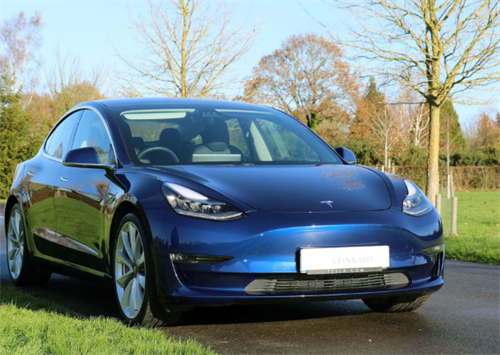
The Tesla Model 3 Performance is often discussed as if it were merely a quicker version of the Long Range model. In reality, from a battery aging and ownership-cost perspective, it occupies a different category. Higher discharge rates, sustained thermal load, larger wheels, and more aggressive real-world usage patterns fundamentally change how energy is consumed and how owners perceive battery health over time.
What âBattery Degradationâ Really Means in a Model 3 Performance
Battery degradation refers to the irreversible loss of usable energy capacity in a lithium-ion pack. It is measured in kilowatt-hours, not miles. This distinction matters because many Model 3 Performance owners confuse range loss with capacity loss, even though the two are influenced by different mechanisms.
In performance-oriented EVs, apparent degradation is often amplified by efficiency losses unrelated to chemistry. Larger wheels, stickier tires, higher cruising speeds, and aggressive acceleration all raise energy consumption per mile. The battery may still retain most of its original capacity, yet the car travels fewer miles on a charge. Understanding this difference is essential before interpreting any data point.
Verified Long-Term Battery Health Data: What the Evidence Confirms
The most authoritative public dataset on Tesla battery longevity comes from Teslaâs 2023 Impact Report, which aggregates fleet-wide telemetry across Model 3 and Model Y vehicles. According to the report, Model 3 and Model Y Long Range batteries retain approximately 85% of original capacity after 200,000 miles, corresponding to roughly 15% average degradation.
This figure is important for two reasons. First, it confirms that Tesla batteries degrade slowly by automotive standards. Second, it establishes that degradation is front-loaded, with the most noticeable drop occurring early in the vehicleâs life before stabilizing into a long, shallow decline.
However, Tesla does not publish a separate degradation curve for the Performance variant. This omission matters. The Model 3 Performance operates under higher average power loads and thermal stress, meaning it should be understood not as an outlier, but as a model with greater variance around the same baseline.
Independent confirmation comes from Recurrent Auto, which monitors battery health across hundreds of thousands of EVs in real-world use. Recurrentâs data supports Teslaâs findings: most batteries lose a small percentage early on, then age slowly. Importantly, Recurrent also finds that battery replacements outside of recalls or accidents are rare, reinforcing that visible degradation does not equate to imminent failure.

Why Performance Owners Often Perceive âAbnormalâ Degradation
Model 3 Performance owners are statistically more likely to report dissatisfaction with range and battery health, even when measured capacity loss falls within normal limits. This discrepancy stems from how the car is used and how its systems report data.
Higher sustained power output increases heat generation, which temporarily reduces efficiency. Larger wheels increase rolling resistance and aerodynamic drag. Performance tires sacrifice efficiency for grip. Together, these factors can increase real-world energy consumption by 10â20% compared to a Long Range model on smaller wheels.
As a result, a battery that has lost only 8â10% of its original capacity may feel dramatically worse in daily use. The degradation is real, but the perceived loss is magnified by efficiency penalties inherent to the Performance configuration.
Real Owner Case: When Degradation Appears âToo Highâ
A widely discussed owner case involved a 2020 Model 3 with approximately 40,000 miles showing around 15â16% apparent battery degradation, measured via Tesla Service Mode and third-party telemetry tools. At first glance, this appeared significantly worse than fleet averages.
Closer examination revealed several contributing factors: calendar aging before purchase, sustained operation in a hot climate, conservative BMS estimates, and elevated energy consumption from real-world driving conditions. While the measured capacity loss was genuine, it did not indicate abnormal battery failure or accelerated decline.
Cases like this highlight an important truth: early deviation from the average does not predict long-term outcomes. Many vehicles showing higher-than-average degradation at 40,000 miles still follow the same slow aging curve thereafter.
The Role of Teslaâs Battery Management System in Owner Confusion
Teslaâs Battery Management System is designed to prioritize safety and longevity over optimistic range reporting. When a battery spends most of its life in the middle of its charge window, the BMS has limited visibility into true capacity limits. Over time, this can lead to conservative estimates that understate remaining energy.
This is why Tesla engineers and experienced owners recommend occasional full charge and deeper discharge cyclesânot to restore capacity, but to recalibrate measurement accuracy. Recalibration can improve displayed range, but it does not change the underlying chemistry.
For Performance owners who rely heavily on partial charging and Sentry Mode, BMS underestimation is a common contributor to perceived degradation.
Performance Driving, Thermal Stress, and Long-Term Impact
From an engineering perspective, the Model 3 Performance does not inherently âdestroyâ its battery. Teslaâs thermal management system is robust, and the pack is designed to handle high power output. What changes is statistical distribution.
Compared to Long Range models, Performance variants show greater spread in outcomes. Some owners remain close to fleet averages, while others fall modestly below. What they do not show, according to available data, is a higher incidence of catastrophic failure or warranty-triggering degradation.This distinction is critical. Variability is not the same as unreliability.
Battery Health in the Context of Real Ownership Costs
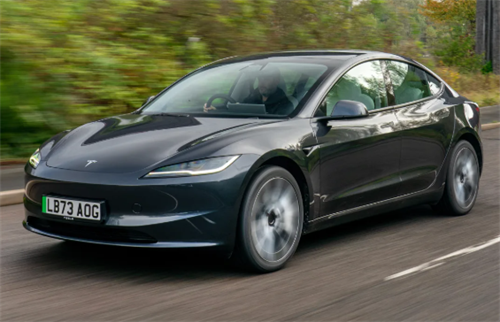
For long-term Model 3 Performance owners, battery degradation is rarely the dominant cost factor. Tire replacement, wheel damage, insurance premiums, and charging efficiency have a far greater financial impact over time.
Even at 85% capacity, a Model 3 Performance remains highly usable for daily driving. The emotional weight placed on battery health often exceeds its practical consequences. From a cost-of-ownership standpoint, moderate degradation is a manageable and expected characteristic, not a financial liability.
Practical Ownership Guidance Grounded in Data
Owners seeking to preserve both usability and peace of mind should focus on behaviors that have demonstrated impact: favoring AC charging for daily use, avoiding prolonged high state-of-charge storage, allowing the vehicle to sleep regularly, and understanding that occasional recalibration improves accuracy, not health.
Equally important is avoiding counterproductive anxiety. Obsessive micromanagement does not meaningfully slow degradation and often reduces enjoyment of the vehicle.
The Real Meaning of Battery Health in a Model 3 Performance
When manufacturer disclosures, independent research, and real-world cases are examined together, a consistent picture emerges. The Model 3 Performance does not suffer from hidden battery fragility. It simply operates closer to the limits of efficiency and thermal load, which amplifies perception without fundamentally changing longevity.
A Model 3 Performance retaining 85% battery capacity after years of use is not a compromised carâit is behaving exactly as modern EV engineering predicts. Understanding this reality is the difference between anxious ownership and informed confidence.
Referencesï¼
[1] Tesla, Inc. (2023). Tesla Impact Report 2023.
https://www.tesla.com/ns_videos/2023-tesla-impact-report-highlights.pdf
[2] Recurrent Auto. (2024). Lessons in Electric Vehicle Battery Health.
https://www.recurrentauto.com/research/lessons-in-electric-car-battery-health
[3] Kane, M. (2024). Average Tesla Model 3 and Model Y Battery Degradation After 200,000 Miles. InsideEVs.
https://insideevs.com/news/723072/tesla-model-3-y-battery-degradation-200000-miles/
[4] Consumer Reports. (2023). Electric Vehicle Ownership Costs and Battery Longevity.
https://www.consumerreports.org/cars/hybrids-evs/ev-battery-replacement-costs-a5274532535/
Recommended for you