In-Depth Calculation of the Cost of Toyota and Honda Hybrid Models Compared with Gasoline Versionsâand How Long It Really Takes to Break Even
For more than a decade, hybrids have occupied a unique middle ground between traditional gasoline vehicles and pure battery-electric cars. They promise lower fuel consumption without the infrastructure anxiety of charging, and manufacturers such as Toyota and Honda have refined hybrid technology to a level of exceptional mechanical maturity. Yet despite their popularity, one fundamental question remains poorly answered in most consumer discussions: are hybrids actually more cost-effective over time than comparable gasoline models, and if so, under what conditions?
Total Cost of Ownership: Why Fuel Savings Alone Are Misleading
A recurring mistake in hybrid discussions is isolating fuel economy as the decisive metric. In reality, fuel is only one component of total cost of ownership (TCO), which typically consists of depreciation, fuel or energy, insurance, maintenance, taxes, and resale value. Industry tools such as Edmunds True Cost to Own® and Kelley Blue Book ownership cost models consistently show that depreciation remains the single largest expense category for most vehicles, often exceeding fuel costs over a five-year horizon.
This distinction is critical because a vehicle that consumes less fuel but depreciates faster can ultimately cost more to own than a less efficient car with stronger resale value. This dynamic explains why some hybrids â despite impressive fuel economy â fail to deliver financial savings in real ownership conditions, a point reinforced by Vincentricâs long-running Hybrid Ownership studies. Recognizing this interplay between operating cost and resale stability is essential to understanding the real economics of hybrid ownership.
A Standardized Ownership Scenario: Setting the Ground Rules
To evaluate hybrids fairly, a consistent usage model is required. Drawing from both Western cost models and widely cited Chinese ownership calculation frameworks, this analysis assumes a five-year ownership period, annual mileage between 15,000 and 20,000 miles (24,000â32,000 km), and total distance of roughly 75,000â100,000 miles. Fuel prices are set to moderate but realistic long-term averages rather than short-term lows, and it is assumed that no major accidents or catastrophic mechanical failures occur.
This framework mirrors real consumer behavior more closely than idealized laboratory conditions and allows meaningful comparison across powertrains. By holding these variables constant, differences in ownership costs can be attributed primarily to powertrain design, efficiency, and residual value behavior. This approach provides a foundation for comparing Toyota and Honda hybrids with their gasoline counterparts on a level playing field.
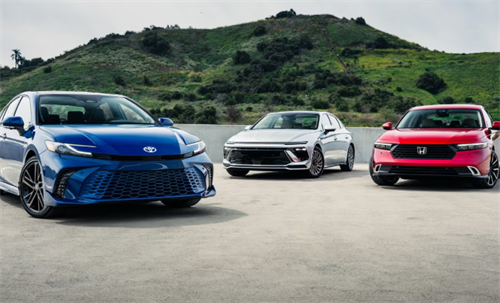
Toyota Corolla Hybrid vs. Corolla Gasoline: When the Math Actually Works
Among compact sedans, the Toyota Corolla Hybrid stands out as one of the few cases where hybrid economics are consistently favorable. According to Kelley Blue Book five-year ownership estimates, the Corolla Hybrid can cost several thousand dollars less to own than its gasoline counterpart, despite a higher initial purchase price.
While fuel savings contribute meaningfully to this outcome, the decisive factor is residual value stability. Corolla Hybrids retain strong demand in the used market because their real-world fuel economy advantage remains relevant even as conventional gasoline engines become more efficient. Maintenance costs are also predictable, as Toyotaâs hybrid system has proven durable across millions of vehicles globally. Under average mileage conditions, most Corolla Hybrid owners recover the hybrid premium within three to five years, aligning closely with real-world owner reports.
This combination of fuel economy, reliability, and resale makes the Corolla Hybrid economically defensible even under conservative assumptions.
Toyota Camry Hybrid: Efficiency Meets Diminishing Returns
The Camry Hybrid presents a more complex picture. Fuel savings remain significant, but the gasoline Camry has become increasingly efficient, narrowing the consumption gap between the two powertrains. Analysis from Vincentric highlights this trend: as conventional powertrains reach 35â40 mpg, the incremental benefit of hybridization shrinks.
In typical ownership scenarios, fuel savings alone rarely justify the Camry Hybridâs price premium unless annual mileage is above average or fuel prices remain elevated over an extended period. However, depreciation behavior plays a compensating role. Camry Hybrids tend to age gracefully in the used market, especially among buyers prioritizing reliability and low operating costs. Most owners reach break-even between four and seven years, making the Camry Hybrid a rational choice for long-term holders, though less compelling for those planning shorter ownership cycles.
Honda Accord Hybrid: Competitive, but Not Automatically Cheaper
Hondaâs hybrid strategy differs subtly from Toyotaâs, emphasizing system integration and drivability over maximum fuel economy. The Accord Hybrid delivers strong real-world efficiency, but both Edmunds and Vincentric data indicate that its total ownership cost advantage over the gasoline Accord is highly usage-dependent.
In moderate mileage scenarios with low fuel prices, the hybrid premium may not fully pay back within five years. Yet for drivers with high urban mileage â where regenerative braking and electric-only operation dominate â the Accord Hybridâs operating cost advantage becomes more tangible. Residual value again functions as a balancing factor, as Accord Hybrids tend to depreciate more slowly than many competitors. This helps long-term owners close the gap even when fuel savings alone are insufficient, demonstrating that the financial logic of hybrids is strongly conditional on real-world driving patterns.
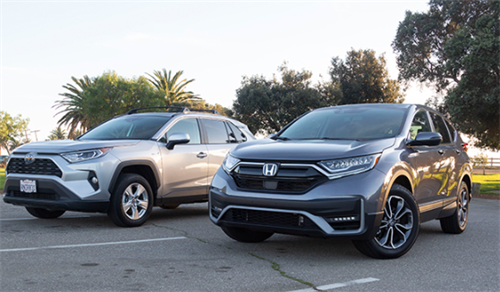
Hybrids vs. Pure EVs: Why Lower Running Costs Donât Guarantee Lower Ownership Costs
It is often assumed that pure electric vehicles are inherently cheaper to own, but this perception breaks down under closer examination. While electricity costs and routine maintenance are low, residual value erosion is a significant vulnerability, particularly in price-sensitive segments.
Simplified five-year models, similar to those used in Chinese market analyses, show that EVs may experience heavier depreciation than both gasoline and hybrid vehicles, negating some of their operational cost advantages. Public charging introduces additional hidden costs, including parking fees, time lost, and infrastructure uncertainty. For high-mileage commercial users, such as ride-hailing drivers, EVs can still dominate economically. However, for private owners with average mileage, hybrids frequently represent a more balanced and predictable financial profile.
Maintenance Reality: Fewer Myths, More Patterns
Hybrid maintenance is often misunderstood. Although hybrids are mechanically more complex, real-world data show that brake wear is significantly reduced, engines experience less stress, and service intervals remain predictable. Concerns over battery replacement are increasingly outdated, as modern Toyota and Honda hybrid packs routinely exceed 150,000â200,000 miles without intervention. Insurance costs may be marginally higher, but this effect is generally smaller than depreciation or fuel variance and rarely alters the overall cost equation.
The Real Payback Question: Who Should Buy a Hybrid?
Synthesizing all data points leads to a clear conclusion: hybrids reward patience and high mileage. They are most financially effective for drivers who hold vehicles longer than five years, drive above-average annual mileage, operate primarily in urban or mixed conditions, and value both resale stability and fuel price insulation. For short-term owners or low-mileage suburban drivers, gasoline vehicles frequently remain more cost-effective and simpler to manage.
Toyota and Honda hybrids are neither universally cheaper nor niche compromises. They are precision tools whose financial logic emerges only when matched to the right ownership context. When chosen thoughtfully, models like the Corolla Hybrid, Camry Hybrid, and Accord Hybrid can deliver real, measurable savings. When selected without considering usage patterns, they may disappoint expectations shaped by marketing rather than rigorous cost analysis.
The correct question, therefore, is not âAre hybrids worth it?â It is âAre hybrids worth it for how long I plan to own, how much I drive, and how I actually use my car?â Answer that honestly â and the math will answer the rest.
Referencesï¼
[1] Edmunds. (2024). True cost to own: Vehicle ownership cost analysis. https://www.edmunds.com/tco.html
[2] Kelley Blue Book. (2024). 5-year cost to own data for Toyota Corolla Hybrid and Camry Hybrid. https://www.kbb.com
[3] Vincentric, LLC. (2023). U.S. hybrid ownership cost study. https://www.vincentric.com
[4] Eisenstein, P. A. (2016). Do your math carefully to figure out if hybrids are worth the added cost. NBC News. https://www.nbcnews.com
[5] U.S. Department of Energy. (2024). Vehicle fuel economy trends and ownership considerations. https://www.energy.gov
Recommended for you