Are Water-Based Paints and Recycled Materials More Likely to Cause Scratches or Odors Over Time?
Over the last ten to fifteen years, the car industry has gone through a quiet but fundamental change. Engines still get most of the attention, but materialsâespecially paint and interior componentsâhave changed just as much. Water-based paints have replaced traditional solvent-based paints, and recycled plastics are now widely used inside cabins.
For many car lovers, this shift creates doubt. Owners who keep their vehicles for a long time often notice two things: modern paint seems easier to scratch, and some cars develop strange interior smells that do not fully disappear. Online forums are full of comments blaming âenvironmental materialsâ for these problems.
But are these concerns justified?
Based on industry repair data, long-term ownership studies, and environmental research, the answer is more nuanced than a simple yes or no. Eco-friendly materials are not automatically worse. However, they behave differently from older materials, and those differences become visible over timeâespecially when cars are used in hot climates, washed incorrectly, or kept for many years.
Why the Industry Moved Away from Traditional Paint and Materials
The move toward water-based paint and recycled materials did not start because carmakers wanted to experiment. It started because regulations became stricter.
In the United States, Europe, and China, governments placed tighter limits on volatile organic compounds (VOCs). These chemicals evaporate easily, contribute to air pollution, and can cause health problems. Traditional solvent-based paints released large amounts of VOCs during manufacturing and repair.
Water-based paints reduce VOC emissions by more than 70% in many cases, according to data from the U.S. Environmental Protection Agency. Similarly, recycled plastics help manufacturers lower carbon emissions and reduce waste.
From an environmental and regulatory point of view, these changes make sense. The question for owners is whether long-term durability was compromised along the way.
Understanding Modern Automotive Paint Systems in Simple Terms
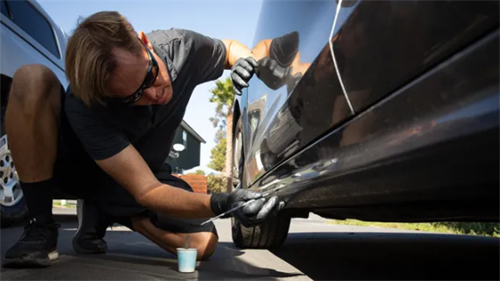
A modern carâs paint is not just âpaint.â It is a system with several layers, each doing a different job. First comes the primer, which helps paint stick to metal or aluminum. Next is the color layer, which gives the car its appearance. Finally, there is the clearcoat, a transparent layer that protects everything underneath.
Water-based paint usually refers to the color layer, not the entire system. The clearcoat is often still solvent-based or uses hybrid chemistry.
This is important because most scratches, swirl marks, and fading issues involve the clearcoat, not the water-based color layer. When owners say, âModern paint is too soft,â they are usually talking about clearcoat behavior.
Are Water-Based Paints Actually Less Durable?
Large-scale data does not support the idea that water-based paint fails faster by default.
Collision repair industry reports from CCC Intelligent Solutions show that paint failure rates over five to seven years are similar between cars painted with water-based systems and older solvent-based systems, assuming proper factory application.
What has changed is tolerance. Older paint systems were often thicker and more forgiving. Modern paint systems are engineered for efficiency, weight reduction, and precise application. This means they perform well when everything is done correctlyâbut show flaws more clearly when exposed to poor washing habits or harsh environments.
In simple terms: modern paint is not weaker, but it is less forgiving.
Why Scratches Seem More Visible on Newer Cars
Many owners feel that newer cars scratch more easily than older ones. This perception has several explanations.
First, clearcoat thickness has been reduced on some models to save weight and material costs. Second, modern clearcoats are designed to meet environmental and repair standards, which sometimes results in slightly softer surfaces.
Softer does not mean fragile, but it does mean swirl marks from automatic car washes or dry wiping appear faster. Dark-colored cars make this especially obvious.
Interestingly, luxury brands often apply thicker or harder clearcoats, which is why premium vehicles may look better after several years, even if they use similar water-based paint underneath.
The Role of Climate and Sun Exposure
Climate plays a major role in how paint ages. Cars driven in mild environments often look good for many years. Cars exposed to intense sunlight, high temperatures, or frequent dust and sand wear much faster.
Ultraviolet radiation breaks down clearcoat over time. Once the clearcoat weakens, the color layer underneath becomes vulnerable. This process happens regardless of paint type, but thinner clearcoats show damage sooner.
This explains why two identical cars can age very differently depending on where they are used and stored.
Interior Odors: A More Complicated Issue
Interior smells are a more complex and more valid concern.
Water-based paints and eco-friendly adhesives release far fewer harmful fumes during manufacturing, but studies show they can still contain chemicals that evaporate slowly over time. These are often called semi-volatile organic compounds, or SVOCs.
A 2022 study led by Ying Xu from Tsinghua University analyzed popular water-based paints worldwide. The researchers found that many paints labeled âlow-VOCâ still contained measurable levels of chemicals that can persist in indoor environments for years.
In cars, where space is small and ventilation is limited, these compounds can accumulateâespecially in hot weather.
Why Certain âNew Car Smellsâ Tend to Linger Indefinitely
The classic ânew car smellâ comes from a mix of plastics, foams, adhesives, and coatings releasing chemicals into the air. While many people enjoy it at first, others find it unpleasant.
Recycled materials tend to contain more complex chemical histories. Even when processed carefully, they may hold trace residues from previous use or stabilizing additives. These substances are not usually dangerous, but they can contribute to lingering odors.
Heat makes the problem worse. When a car sits in the sun, interior temperatures can exceed 60°C (140°F). At these temperatures, chemical release increases sharply.
This is why some owners notice smells returning every summer, even after years of ownership.
Are Recycled Interior Materials Less Durable?
From a structural point of view, recycled plastics perform very well. Automotive-grade recycled materials must meet strict strength and aging standards.
Studies by the Society of Automotive Engineers show no significant difference in cracking or structural failure between recycled and virgin plastics when recycled content stays within controlled limits.
However, surface aging can differ. Some recycled plastics may become glossy, sticky, or slightly brittle sooner if exposed to heat and UV light. These changes are cosmetic rather than structural, but they affect perceived quality.
The Five- to Seven-Year Reality Checkï¼
Many long-term issues appear between five and seven years of ownership. This timing is not accidental.
By then, paint has experienced thousands of heat cycles. Interiors have absorbed years of sunlight, humidity, and chemical exposure. Small weaknesses become visible.
This does not mean modern cars are worse than older ones. In fact, mechanical reliability has improved significantly. But material aging is now more noticeable because expectations are higher.
Owners expect modern cars to look new for longer, and when they donât, disappointment follows.
Maintenance Habits Matter More Than Material Choiceï¼
One clear conclusion from ownership studies is that how a car is treated matters more than what it is made from.
Cars that are washed gently, protected with wax or paint sealants, and parked in shade age much better visually. Interiors that are aired out regularly and protected from heat smell fresher for longer.
On the other hand, frequent automatic car washes, harsh cleaners, and constant sun exposure accelerate wear on any material, eco-friendly or not.
Cost, Sustainability, and Long-Term Ownership
From a cost perspective, eco-friendly materials do not automatically mean higher ownership expenses. In fact, modern paint systems are easier to repair locally, which can reduce repainting costs after minor damage.
Interior parts made from recycled materials are often modular and cheaper to replace. The challenge is not costâit is awareness.
Owners who understand how modern materials behave can adjust their care habits and avoid many problems.
What Buyers Should Look for When Planning Long-Term Ownership
For buyers who plan to keep a car for ten years or more, the focus should be on overall material quality, not marketing labels.
Look for manufacturers known for conservative material choices, strong clearcoats, and proven interior designs. Early owner reports and long-term tests are more useful than brochure claims.
Avoid assuming that âeco-friendlyâ automatically means fragileâor that âold-schoolâ automatically means better.
Water-based paints and recycled materials are now a permanent part of the automotive world. They are not a temporary trend and not a downgrade by default.Many long-term problems associated with eco-friendly materials arise from thinner protective coatings, exposure to heat, and maintenance practices, rather than sustainability itself. For automotive enthusiasts who are open to adapting to these changes, contemporary vehicles can still provide longevity, an appealing aesthetic, and manageable ownership expenses. The key is realistic expectations and informed care, not fear of new materials.
Referencesï¼
[1] Xu, Y., Zhang, Y., Mo, J., & Weschler, C. J. (2022). Chemical composition and emissions of volatile and semi-volatile organic compounds from water-based paints. Environmental Science & Technology, 56(14), 9876â9886.
[2] U.S. Environmental Protection Agency. (2023). Automotive coatings and VOC reduction standards.
[3] CCC Intelligent Solutions. (2024). Trends in automotive paint systems and repair durability.
[4] Society of Automotive Engineers. (2021). Interior materials emissions, aging, and durability (SAE Technical Paper).
Recommended for you