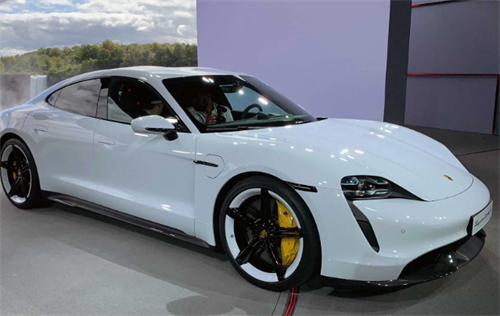
Economics of Home Charging Piles: Cost and Benefit Analysis of Different Power Charging Piles from Application Installation to Daily Use
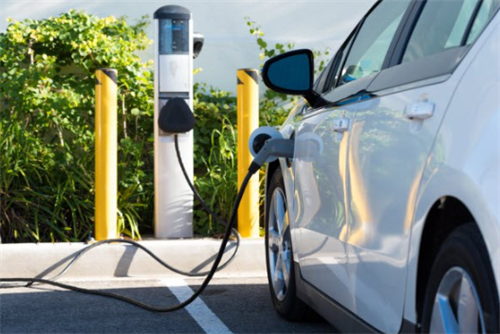
For most electric-vehicle buyers, the decision to install a home charging pile is framed as a technical questionâ7 kW or 11 kW, single-phase or three-phase, smart or basic. In reality, it is an economic decision that unfolds over years of ownership. Charging speed is only one variable, and often not the most important one.
According to a 2023 nationwide charging behavior survey published by the U.S. Department of Energyâs Alternative Fuels Data Center, approximately 80% of all EV charging sessions in the United States take place at home. This pattern is remarkably consistent across vehicle segments and regions, reinforcing a central truth of EV ownership: the long-term cost structure of an electric car is shaped far more by residential electricity pricing, infrastructure cost, and utilization efficiency than by occasional public fast charging.
Understanding Home Charging Power Levels in Real Life
Home charging piles are typically divided into low-power AC (around 7 kW), medium-power AC (11â22 kW), and, in rare residential cases, higher-power solutions that approach commercial specifications. On paper, higher power promises shorter charging times. In practice, household electrical infrastructure, driving patterns, and grid pricing reshape the value equation.
In North America, most detached homes are naturally suited to Level 2 charging between 7 and 11 kW without major electrical upgrades. Above that threshold, installation costs rise sharply, often requiring panel upgrades, utility coordination, or demand charges. These costs rarely translate into proportional daily benefits for typical drivers.
The key economic insight is simple: most EVs sit parked for 10â14 hours overnight, while the average American drives roughly 36 miles per day. This gap between charging capacity and actual energy demand is where inefficiencies emerge.
Installation Economics: Where Most Owners Underestimate Costs
-Hardware and Installation Reality
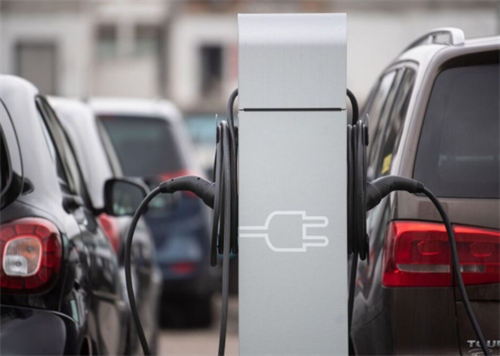
While entry-level home chargers may retail for under $800, installation costs vary dramatically. Data aggregated by Qmerit, one of the largest certified EV charger installation networks in North America, shows that typical Level 2 installations range from $799 to $1,500 when no electrical upgrade is required. However, costs can exceed $3,000 if panel capacity is insufficient or if long cable runs are needed.
This cost curve is non-linear. Moving from a 7 kW charger to an 11 kW unit often requires thicker wiring, upgraded breakers, and, in older homes, service panel expansion. From an economic standpoint, this creates diminishing returns: installation costs rise faster than real-world utility.
-Incentives and Their Limits
Federal incentives in the United States, including a 30% tax credit for residential charging equipment and installation through mid-2026, significantly improve the investment case. However, incentives reduce upfront pain; they do not change the underlying economics of utilization. A higher-power charger that is rarely used at full capacity remains economically inefficient even after subsidies.
Daily Charging Costs: The Quiet Advantage of Home Energy Pricing
As of late 2025, the average residential electricity price in the United States stands at approximately $0.18 per kWh, according to the U.S. Energy Information Administration. At this rate, fully charging a 72 kWh EV battery at home costs roughly $12.96. With most EVs achieving three to four miles per kWh, the resulting energy cost averages around $0.05 per mile.
For an annual driving distance of 13,489 milesâthe U.S. national averageâthis translates to approximately $693 per year in home charging costs. By comparison, fueling a similarly sized internal-combustion vehicle costs between $1,600 and $2,100 annually at prevailing fuel prices.
Time-of-use pricing further amplifies the advantage. Owners who charge during off-peak hours can reduce effective electricity costs by 20â40%, a benefit that scales with long-term ownership rather than charging speed.
Public Charging as an Economic Contrast, Not a Replacement
Public charging plays an important role, but its economics are fundamentally different. Industry data compiled by Stable Auto shows that public Level 2 charging averages about $0.25 per kWh, while DC fast charging averages roughly $0.47 per kWh. A full charge on a 72 kWh battery therefore costs $18 at public Level 2 stations and nearly $34 at DC fast chargers.
Over a year, exclusive reliance on public charging raises energy costs to between $964 and $1,811, eroding much of the EVâs operating-cost advantage. This gap explains why home charging dominates behavior despite the expansion of public networks.
Long-Term Ownership Economics: Charging Power vs. Total Cost of Ownership
Lower fueling costs are only part of the picture. Maintenance economics amplify the value of home charging decisions.
According to long-term ownership analyses summarized by Consumer Reports, electric vehicles average approximately $4,600 in maintenance costs over five years, compared with $7,800 for gasoline vehicles. However, charging behavior influences battery health, which remains the most expensive single component in an EV.
Studies consistently show that frequent reliance on DC fast charging accelerates battery degradation. In warm climates or under heavy fast-charging use, capacity loss of 3â9% over 50,000 miles has been observed. While home Level 2 charging cannot eliminate degradation, it significantly moderates it, protecting residual value and delaying costly battery replacement.
International Evidence: Why 7 kW Charging Dominates Household Economics in China
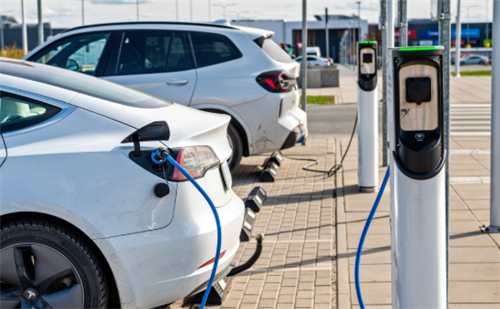
Large-scale international research reinforces these findings. A comprehensive costâbenefit analysis published in Sustainable Cities and Society by researchers from Tsinghua University examined residential, fast, and ultra-fast charging models under Chinaâs differentiated subsidy policies. The study concluded that 7 kW AC charging is economically optimal for household use.
The reasoning is instructive. Low-power AC chargers have the lowest equipment and installation costs, require minimal grid reinforcement, and align perfectly with nighttime off-peak electricity availability. As a result, they achieve the shortest investment payback period and highest utilization efficiency for private users.
While Chinaâs policy environment differs from that of the United States, the economic logic converges: residential charging efficiency depends more on utilization rate and cost alignment than raw power output.
Choosing the Right Charging Power: A Cost-First Framework
For most private EV owners, the economically rational choice is not the fastest charger available but the charger that best matches daily energy needs. A 7 kW system can typically replenish 40â50 kWh overnightâenough for 150â200 miles of range. For the vast majority of households, this exceeds daily consumption by a wide margin.
Higher-power systems only make sense in edge cases: multi-EV households with limited parking time, commercial home use, or regions with unusually low installation costs and high electricity price volatility. Even then, the return on investment should be evaluated over years, not weeks.
The economics of home charging piles reveal a consistent pattern across markets and studies. Charging speed beyond daily requirements offers rapidly diminishing returns, while installation cost, electricity pricing, and utilization efficiency dominate long-term value.
Data from U.S. federal agencies, real-world installer networks, and peer-reviewed international research converge on the same conclusion: moderate-power home charging delivers the lowest total cost of ownership for most EV drivers. By aligning infrastructure choices with actual driving behavior, owners can preserve battery health, minimize operating costs, and maximize the economic advantage of electric mobility.
References:
[1] U.S. Department of Energy. (2023). EV charging behavior and infrastructure utilization. Alternative Fuels Data Center.
[2] U.S. Energy Information Administration. (2025). Electric power monthly: Average retail price of electricity.
[3] Consumer Reports. (2024). Electric vehicle maintenance and ownership cost analysis.
[4] Yang, M., Zhang, L., & Dong, W. (2020). Economic benefit analysis of charging models based on differential electric vehicle charging infrastructure subsidy policy in China. Sustainable Cities and Society, 59, 102206. https://doi.org/10.1016/j.scs.2020.102206
[5] Stable Auto. (2024). Public EV charging pricing trends in North America.
Recommended for you